




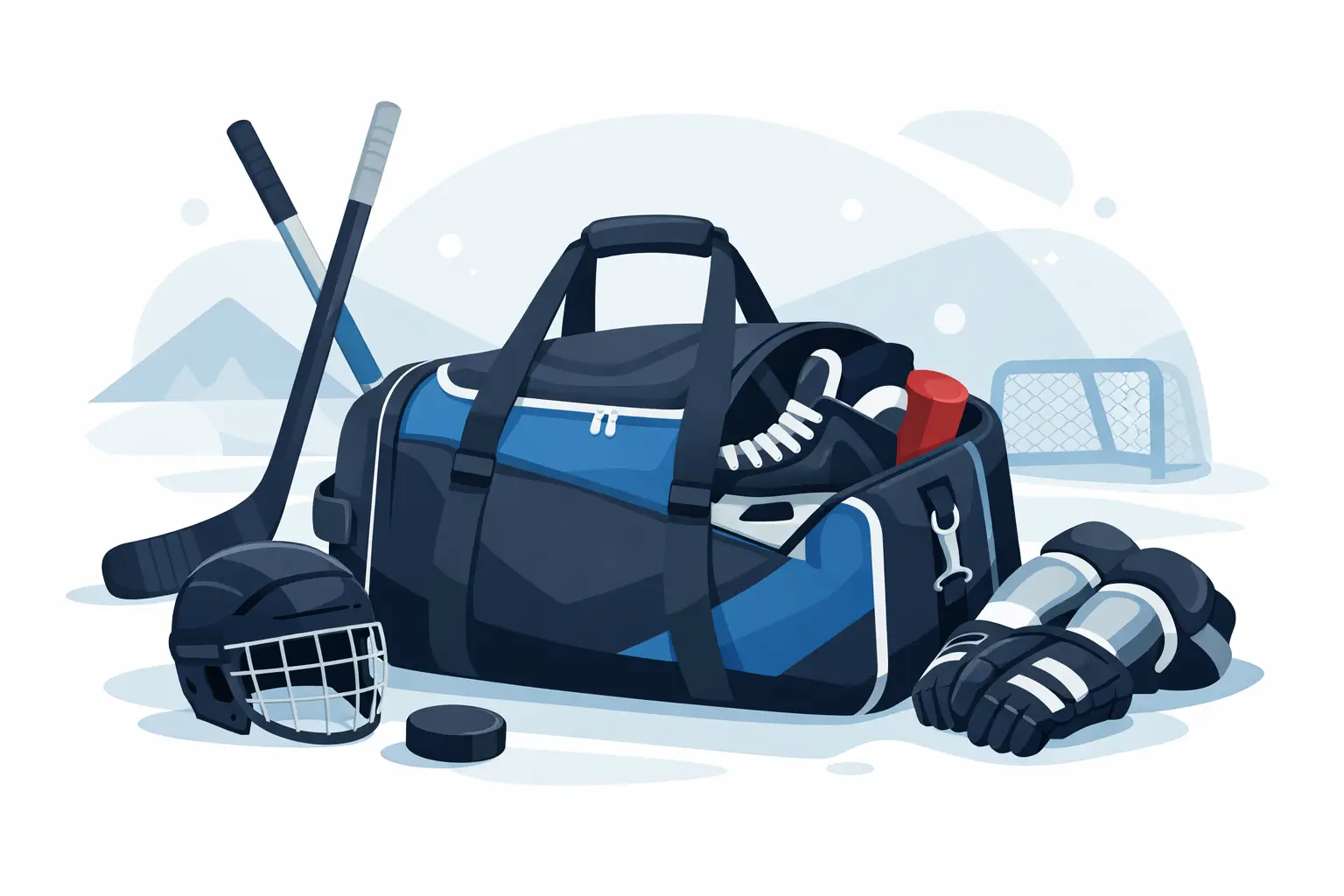
Laces wet after practice, gloves thrown in loose, shin guards crammed in with a bit of force, and a helmet that barely closes – this is often the moment when you're asked if your hockey equipment bag is the right fit. Hockey isn't just about what you have on the ice. It's also about how you transport your entire kit, how quickly you pack it, and whether the bag is still suitable for play after the season, not just about replacing it.
A good bag isn't an afterthought. It's a part of everyday equipment use. If you play several times a week, commute to practices, tournaments, or away games, the bag gets as much use as your skates or stick. Therefore, it's worth choosing it consciously, not solely based on size and price.
What Hockey Equipment Bag Makes Sense in Practice?
The most important question is simple: how much gear you really need to fit. A youth or junior skater needs different capacity than a senior or goalie. In practice, the bag should hold the entire kit without forcing the components, as this shortens the lifespan of the zippers, seams, and shin guards themselves.
For an outfield player, the basics include space for skates, shin guards, pants, shoulder pads, elbow pads, gloves, a helmet, and training clothes. Accessories often include tape, a water bottle, spare laces, technical underwear, and small maintenance equipment. If the bag is chosen to fit snugly, the order is gone after the first week of use.
For goalkeepers, the situation is different. Equipment is larger, heavier, and less manageable, so a traditional outfield bag is usually insufficient. Here, not only liter capacity matters, but also a wide main opening, strong handles, and material that can withstand heavy loads. A bag that's too small for a goalie is the quickest way to fight a zipper after every training session.
Bag size and age category and position
Size should be considered based on the player's category, but without a locking mechanism. Not all juniors are created equal. One player plays recreationally twice a week and packs a basic kit, while another travels to tournaments, carries more clothing, and needs extra space. Therefore, the description "senior, intermediate, junior, or youth" is a good starting point, but it shouldn't be the only criterion.
Parents of younger players often choose a bag that's "oversized" so it will last longer. This sometimes makes sense, but only up to a point. A bag that's too large can be unwieldy, heavier, and more difficult for a child to carry. If a young player carries their gear to the locker room themselves, it's better to choose a model that fits their current kit rather than a huge bag with excess space.
For adult players, it's also worth considering their travel style. If you commute by car and the bag is a short distance, you can easily choose a larger model. If you frequently climb stairs, travel between the rink and the parking lot, or pack very quickly, ergonomics become more important than capacity.
Material and construction – this is where quality comes into play
A hockey bag operates in harsh conditions. Ice, moisture, rubber mats, concrete near the locker room, frequent tossing and dragging across the floor all take their toll. Therefore, the material must be resistant to abrasion and stretching. Thin fabric may look good initially, but with regular use, it will quickly show its weaknesses.
It's worth paying attention to a reinforced bottom. This detail significantly extends the life of the bag, especially if you frequently place it on a wet floor or carry a heavier set. It's good if the bottom doesn't immediately absorb moisture and doesn't warp under the weight of skates and shin guards.
Handles and straps are equally important. A bag can be spacious and sturdy, but if the handles are sewn in too loosely, problems will quickly arise. In practice, these are the elements that take the brunt of everyday use. Strong stitching and secure straps make a difference after a few months, not just on the day of purchase.
Ventilation and Interior Organization
Hockey equipment doesn't smell new after practice. This is normal. Therefore, a good hockey equipment bag should support ventilation, not trap moisture like a sealed container. Ventilation panels, mesh inserts, or a well-thought-out pocket layout help reduce the problem of excessive moisture.
It's not that a bag will replace drying your gear. It won't. But it can make transport easier and reduce the risk of everything sitting in a wet mess. This is especially important if you get home late after a workout and don't unpack right away.
Side pockets or internal compartments are also useful. Some people prefer to throw everything into one compartment, others want to separate skates, underwear, straps, and other small items. There's no single correct layout. However, if you're often searching for laces, a neck gaiter, or a locker room key, additional pockets quickly prove more practical than a minimalist design.
Classic Bag or Wheeled Bag
The choice depends on your load and usage. A classic bag is simpler, lighter, and usually less prone to breakdowns. Good.
A hockey bag must hold all your equipment, last the entire season, and be easy to transport. Learn how to choose the right model.
- added: 02-07-2026
- in category Player , Goalie , Recommendations
 Log in with Facebook
 Log in with Google