




A goalie has no margin for error. If the guards rotate incorrectly, the vest restricts movement, or the catcher doesn't close properly, the problem becomes apparent immediately – in training, in the match, and with every subsequent shot. Therefore, hockey goalie equipment can't be chosen "roughly." Protection, range of motion, and consistency in play are key.
A good goalie kit doesn't start with the graphics or the brand itself. It starts with how you play, at what level, how often you train, and whether you need equipment for on-ice or in-line hockey. These differences determine whether the chosen model will provide real support or just a costly compromise.
Goalkeeper equipment must be chosen as a complete system.
The most common mistake when purchasing goalie equipment is treating each component separately. Of course, you can buy guards from one brand, a vest from another, and gloves from a third. In practice, however, goalie equipment works best when the individual components are perfectly matched in terms of mobility, protection profile, and body position.
If the guards force you to butterfly in a specific way, and the pants are too loose around the hips, movement becomes slower. If the vest sits high and interferes with the mask when in the ready position, you lose the ability to track the puck. This isn't visible in product photos; it only becomes apparent in real life.
Therefore, when assembling equipment, it's worth thinking in terms of protection, mobility, puck feel, and durability. For younger players, there's another criterion – the ability to safely grow with the player, without buying "oversized" equipment at the expense of movement control.
What Makes Up Complete Goalie Equipment
A basic hockey goalie kit includes a mask, vest, guards, catcher, rebounder, goalie stick, goalie pants, neck brace, jockstrap, skates, and appropriate underwear and accessories. Each of these components operates under different loads and has a different purpose.
The mask is responsible not only for head protection but also for visibility and stability when receiving shots. The vest must absorb impacts from the front without restricting the shoulders and arms. The goalie's guards are designed to seal the ice and aid movement in the goal, not just cushion shots. The catcher and rebounder, on the other hand, are purely functional – grip, rebound control, and quick reaction on rebounds.
That's why there's no single "best" set for everyone. A junior learning technique has different needs, an adult amateur playing twice a week has different ones, and a player who regularly takes powerful shots in training and league matches has still different ones.
Mask and Head Protection
There's no point in looking for apparent savings on this element. A goalie's mask must fit securely on the head, stay stable during movement, and not create pressure points. Too loose will cause problems when shooting. Too tight will quickly become a problem after just a dozen or so minutes on the ice.
The shell, padding, quality of the mesh, and field of vision are all important. Younger players often focus primarily on appearance, but parents and coaches should primarily focus on the level of protection and the actual fit. A facemask should protect, not just look good with the rest of the kit.
Vest and Pants
A good goalkeeper vest should cover key areas without feeling like "armor" that restricts movement. It's a delicate balance. A more closed-in model usually provides a greater sense of security, but can limit shoulder rotation and hand movement. Lighter designs are faster, but they aren't always sufficient for powerful shots.
The same applies to pants. They should work with the cage and not leave any exposed space in the ready position and butterfly drop. Overly large pants don't automatically improve safety. They often impair mobility and slow down the set.
Pants, catcher, and rebounder
This is the center of a goalkeeper's work. Pants must suit their playing style. Some prefer a softer feel and smoother movement, while others seek a stiffer rebound and maximum ice seal. This is where the difference between recreational and competitive levels truly shines through.
A catcher should close naturally. If it requires significant hand strength or doesn't align with your grip, it will be irritating from the first practice session. A catcher must provide control and confidence when receiving shots. Too bulky can slow your hand, while too soft can result in a poor feel.
Goalkeeper Stick and Skates
A goalie's stick isn't just about length and design. Blade geometry, shaft profile, balance, and how the stick performs when playing the puck are important. A goalie who actively initiates plays will have different expectations than one who focuses solely on defense and control of the infield.
Goalkeeper skates must provide stability and precision. In this case, too much extra space can be more detrimental than helpful. The foot must be firmly planted, as any unnecessary internal work can lead to injury.
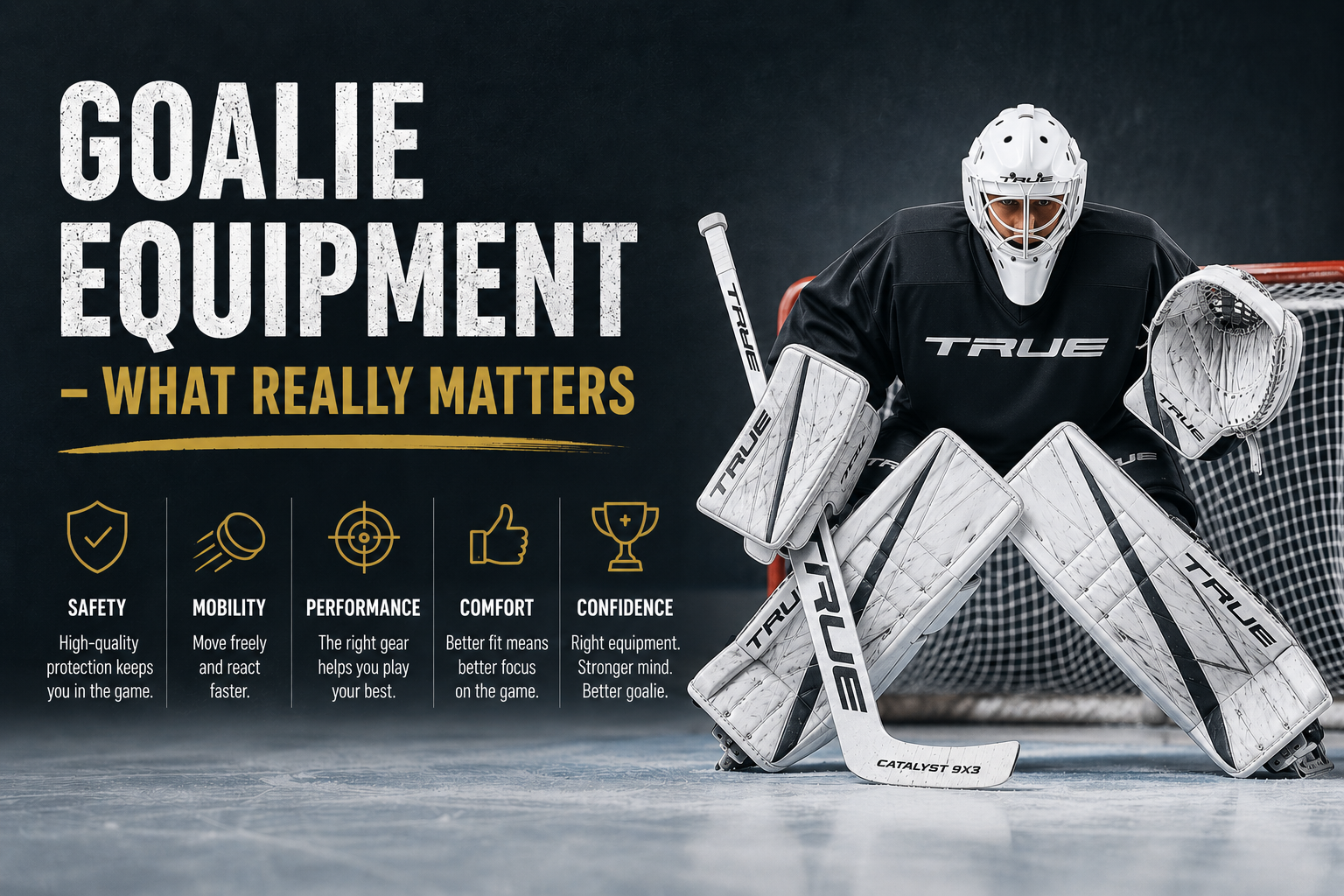
Ice hockey goaltending gear must provide protection, mobility, and confidence in the crease. Find out how to select the right components—without leaving anything to chance.
- added: 08-07-2026
- in category Goalie
 Log in with Facebook
 Log in with Google