




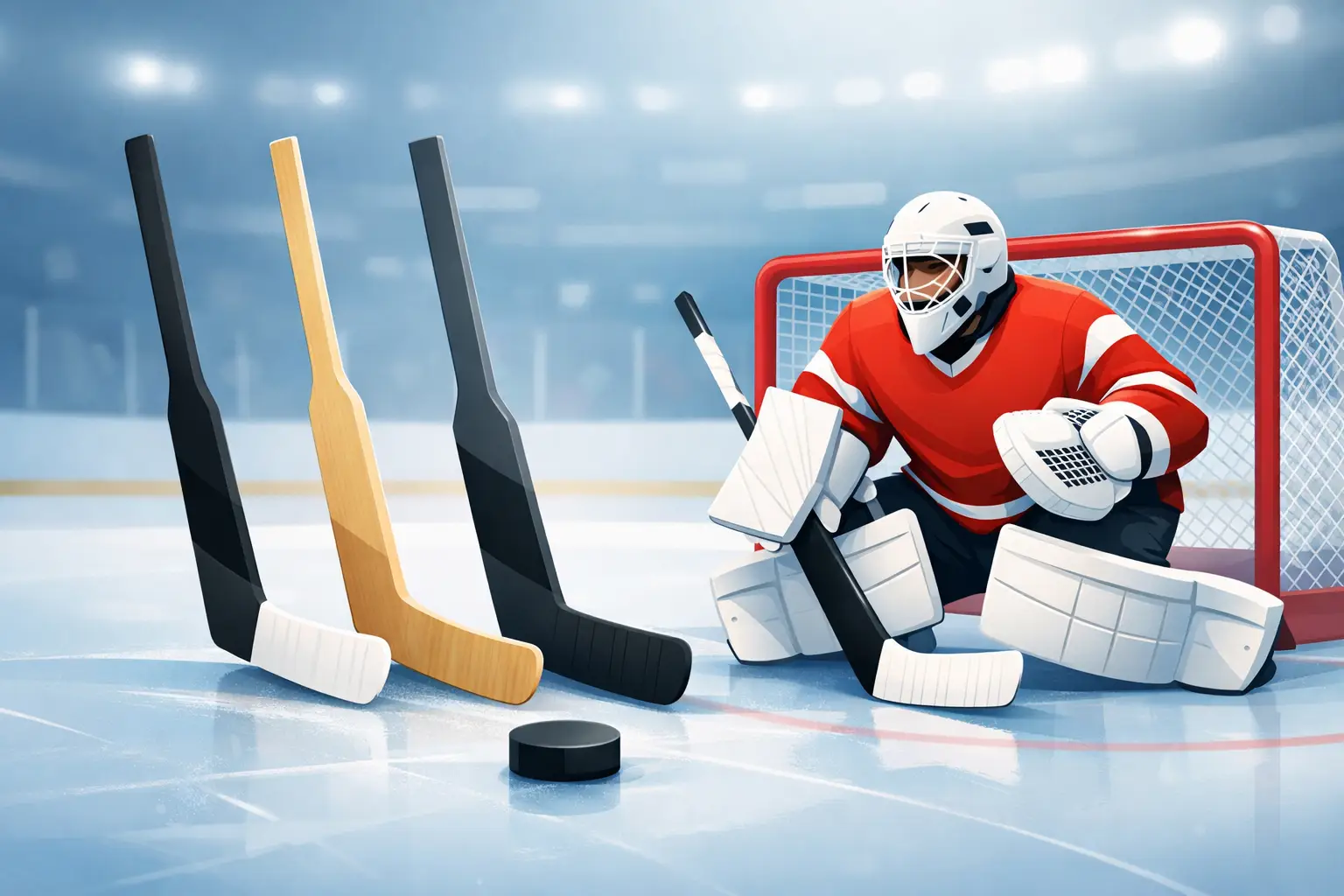
You'll quickly recognize the first bad goalie stick – the puck bounces where it shouldn't, the release is uncontrolled, and the stick hinders more than it helps. If you're wondering which stick is right for a goalie, don't just look at the brand and price. In this position, matching your defending style, height, stance, and level of play is key.
A well-chosen goalie stick should work with you in the slot, at the boards, and during play. A goalie uses it differently than a skater – it's not about the shot itself, but about controlling the rebound, closing the ice between the sticks, and confidently handling the puck under pressure. Therefore, the choice should be based on several specific parameters.
Which hockey stick makes sense in practice for a goalie?
The most common mistake is buying a model "by eye." A stick might look good in the description, but if it has the wrong shaft length or an inappropriate blade, it will immediately become apparent on the ice. A goalie needs a stick that doesn't disrupt their basic stance and allows them to close the ice naturally.
In practice, you look at four things: length, paddle size, blade construction, and material. Only then should you compare specific Bauer, CCM, TRUE, or Sher-Wood series. For one player, a lightweight composite will be a significant advantage, while for another, a more forgiving model with simpler characteristics will be a better choice.
Stick Length and Paddle - A Starting Point
In goalie sticks, simply defining length can be misleading, because the paddle, the part between the blade and the shaft, is crucial. This largely determines how the stick is positioned in the goalie's stance. A paddle that's too long raises the blocking hand and makes it difficult to guide the stick tightly across the ice. A paddle that's too short forces an unnatural downward movement and compromises control.
Selection depends on height, but even more so on position. A goalie playing a deeper butterfly and with a lower stance often goes lower than their height would suggest. On the other hand, a player who is more active on the edges, often standing and playing the puck, may need a slightly different length. Therefore, trying on a full set of equipment provides a better picture than a dry chart.
The blade – important for defense and playmaking
The blade on a goalie stick affects not only puck clearance but also how the stick performs when closed. Its height, shape, and stiffness translate into stability on close-range shots and comfort when handling the puck behind the net.
A wider and more stable design provides a greater sense of control when rebounding and covering the bottom of the net. This is often a good option for younger or less experienced goalies. A lighter and more dynamic blade will be more interesting for those who play actively and want to react faster with the stick, but this is where the differences in technique are more noticeable.
Goalie Stick Material – Wood, Composite, or Hybrid
This is one of the most important purchase decisions. The material affects weight, balance, puck feel, and durability. There is no one-size-fits-all solution.
Wood sticks or sticks with a high wood content are usually heavier, but they dampen puck contact well and are often more forgiving when learning the basics. For younger players and some amateurs, they're still a sensible option, especially if price and durability for everyday use are top priorities. The downside is weight – with quick reactions and frequent handwork, the difference can be noticeable.
Composites are lighter, faster, and more modern in terms of balance. They facilitate active stick play, aid in quick transitions, and reduce hand fatigue during longer training sessions. On the other hand, they usually cost more, and some models require more conscious technique. If a goalie is just starting out and regularly hits the post, skate, or board with their stick, a very lightweight premium model won't always be the first choice.
Hybrids attempt to combine these two worlds. They offer a compromise between price, weight, and durability. For many club players, they're a sensible middle ground, especially when they need a stick for regular training without immediately entering the top tier. How to Choose a Stick for a Goalie's Playing Style
This is the point where equipment stops being generic and truly begins to fit the player. A goalie who plays calmly, tightly, and limits risk often feels more comfortable with a more stable stick, a little less nervous in their reactions. This type of stick helps with simple saves and safely move the puck into the corners.
However, if you use your stick a lot, go out of bounds, and like to quickly launch counterattacks, a lighter construction can make a big difference. It's easier to maneuver the stick when receiving passes on the boards and quicker to position the blade for a play. However, it's not worth overdoing it with lightness at the expense of durability if you play frequently and intensely.
Youth goalies are usually developing their technique and developing their own style. For them, the best stick isn't the "most advanced" one, but one that doesn't hinder the basics. It should feel good in the hands, provide stability on the ice, and last.
Which stick should a hockey goalie choose? Learn how to choose the right length, blade, material, and hardness for your playing style and level.
- added: 29-06-2026
- in category Goalie , Recommendations
 Log in with Facebook
 Log in with Google